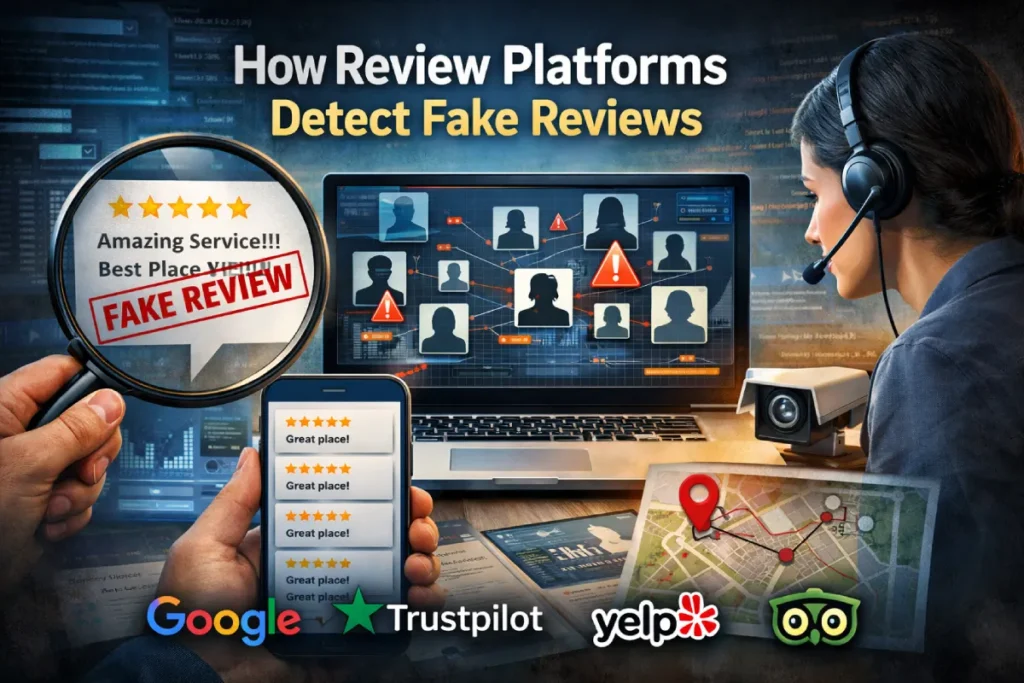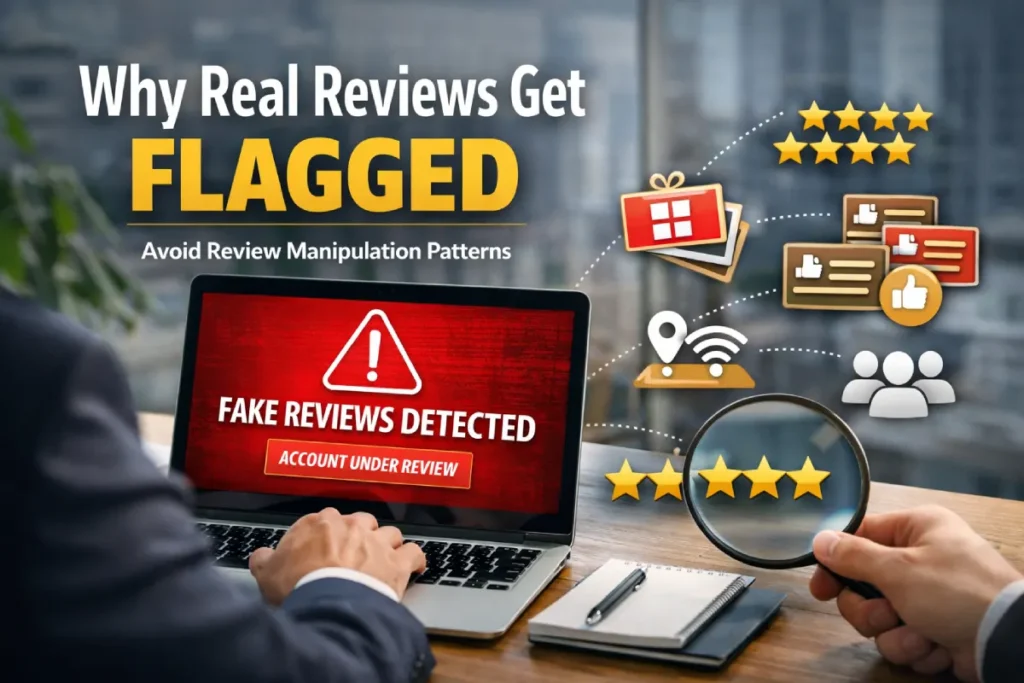
I still remember the first time a client told me their reviews vanished overnight. No warning. No email they could find. Just a silent drop in rating and a loud spike in panic. That moment taught me a lesson I now repeat to every business owner
Reviews are not simply opinions. They are moderated content processed by very different systems
In this article, I explain only the specific moderation workings of Trustpilot, Google, and Yelp. No general talk about reputation. No theory. Just how each system actually treats reviews behind the scenes
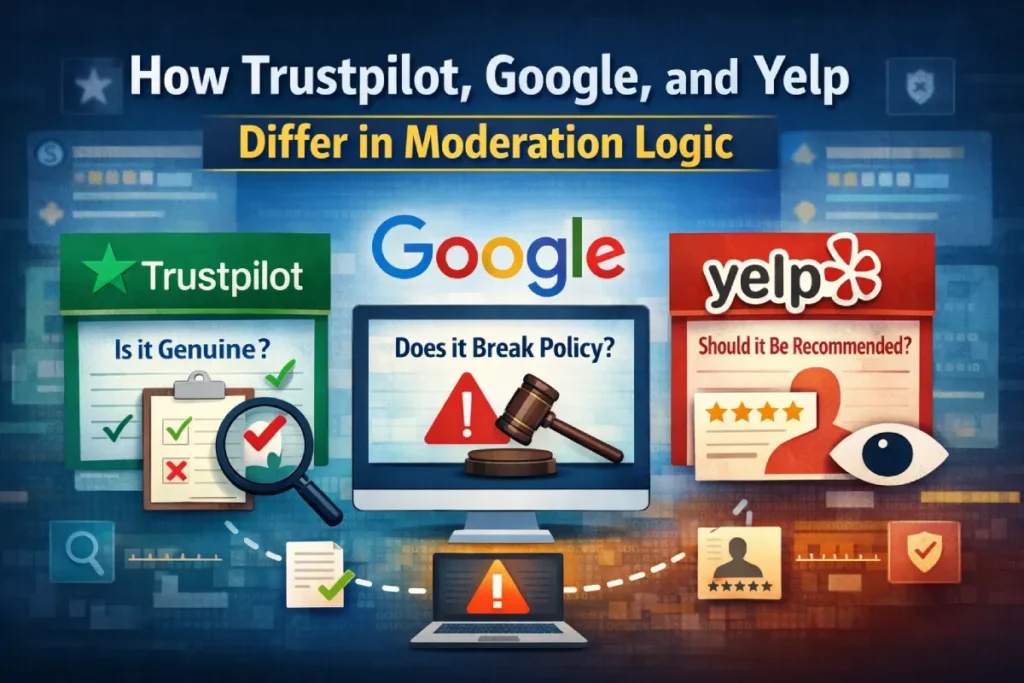
The Three Questions Every Platform Asks About a Review
Every review on any platform goes through three internal checks
- Is this review real
- Does this review break policy
- Should this review be visible
The difference between Trustpilot, Google, and Yelp is which of these three comes first
Trustpilot Moderation Logic: “Is This Review Genuine”
Trustpilot
Trustpilot’s system is designed around one core priority
Authenticity of the experience
What happens when a review is posted
According to Trustpilot, all submitted reviews are checked by automated fake review detection systems
Immediately after submission
- Automated fraud models scan language patterns
- Account behavior is evaluated
- Location and device patterns are checked
- Similarity with other reviews is measured
This is not about the review being positive or negative
This is about whether it looks manufactured
What happens when a business flags a review
According to Trustpilot, businesses should flag reviews that breach guidelines
When flagged
- The review can go offline
- The reviewer may be asked for proof of the transaction
- The burden shifts to the reviewer to verify the experience
This is unique to Trustpilot
What Trustpilot is really checking
Before policy
Before tone
Before fairness
Trustpilot asks
Can this reviewer prove this happened
Result of this logic
- Real customers sometimes get challenged
- Fake review campaigns collapse quickly
- Review bursts trigger suspicion
Google Moderation Logic: “Does This Review Break Policy”

Google does not start with authenticity.
Google starts with a policy violation.
According to Google, only reviews violating policies are eligible for removal
What happens when a review is posted
- Automated spam filters run silently
- If no obvious spam signal appears, the review goes live
- No proof of purchase is checked
- No verification of the customer relationship happens
What happens when you report a review
Google checks it against Google’s lists of prohibited and restricted content categories
Such as
- Harassment
- Hate content
- Irrelevant content
- Spam patterns
- Conflict of interest
If it does not violate a category
It usually stays live
What Google is really checking
Before authenticity
Before fairness
Google asks
Does this content violate a rule
Result of this logic
- Unfair reviews stay
- Real reviews stay
- Fake reviews stay if they do not look like spam
- Only policy-breaking content gets removed
Yelp Moderation Logic: “Should This Review Be Recommended”
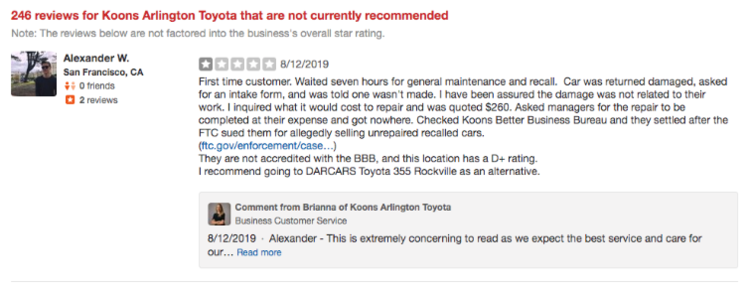
Yelp’s logic is the most misunderstood because Yelp does not begin with removal
According to Yelp, explains how its recommendation software evaluates review reliability
Yelp begins with visibility filtering
What happens when a review is posted
- Yelp checks the reviewer profile strength
- Looks at account age
- Friends, activity, previous reviews
- Writing pattern consistency
If signals are weak
The review goes to Not Recommended
Not removed
Just hidden
What happens when you report a review
Yelp checks it against Yelp’s content guidelines
Only if it clearly violates policy will it be removed
What Yelp is really checking
Before authenticity
Before policy
Yelp asks
Is this reviewer trustworthy enough to be featured
Result of this logic
- Real reviews from new users get filtered
- Businesses think Yelp deleted reviews
- Removal is rare. Filtering is common
Side by Side: The First Question Each Platform Asks
| Platform | First Internal Question | What happens most often |
|---|---|---|
| Trustpilot | Can this be proven | Review goes offline for verification |
| Review stays unless the rule is broken | The review goes to not recommended | |
| Yelp | Is this reviewer reliable | The review is not recommended |
Practical Examples
Same review posted on all three platforms
A new customer leaves a short 5-star review from a fresh account
- Trustpilot may flag it and ask for proof
- Google will likely publish it instantly
- Yelp will likely hide it as not recommended
Angry competitor posts a fake 1-star review
- Trustpilot may detect a pattern and remove
- Google may leave it unless it breaks policy
- Yelp may filter it if the account looks weak
What This Means for Businesses
You cannot use the same strategy across platforms because the moderation logic is different
On Trustpilot
Focus on genuine customer trails and a steady flow
On Google
Focus on policy-based reporting and public responses
On Yelp
Focus on reviewer quality and response quality, not removal
Questions Businesses Ask
Why did Trustpilot remove a real review
Because the reviewer could not verify the experience when asked
Why does Google keep obviously fake reviews
Because they do not break a written rule
Why does Yelp hide good reviews
Because the reviewer profile lacks trust signals
References
- https://corporate.trustpilot.com/trust/trust-report-2025
- https://corporate.trustpilot.com/legal/for-businesses/guidelines-for-businesses/may-2025
- https://support.google.com/business/answer/4596773
- https://support.google.com/contributionpolicy/answer/7400114
- https://trust.yelp.com/recommendation-software/
- https://www.yelp.com/guidelines/content-guidelines